ServicesScreen Cleaning & Repair
Window Screen Cleaning & Repair in Walterboro
Dusty, pollen-coated or torn screens make even clean glass look dull, and they let bugs inside. We wash screens by hand, rinse them clear and fix torn mesh, loose spline and bent frames, and we tell you in plain terms what each fix involves before we start.
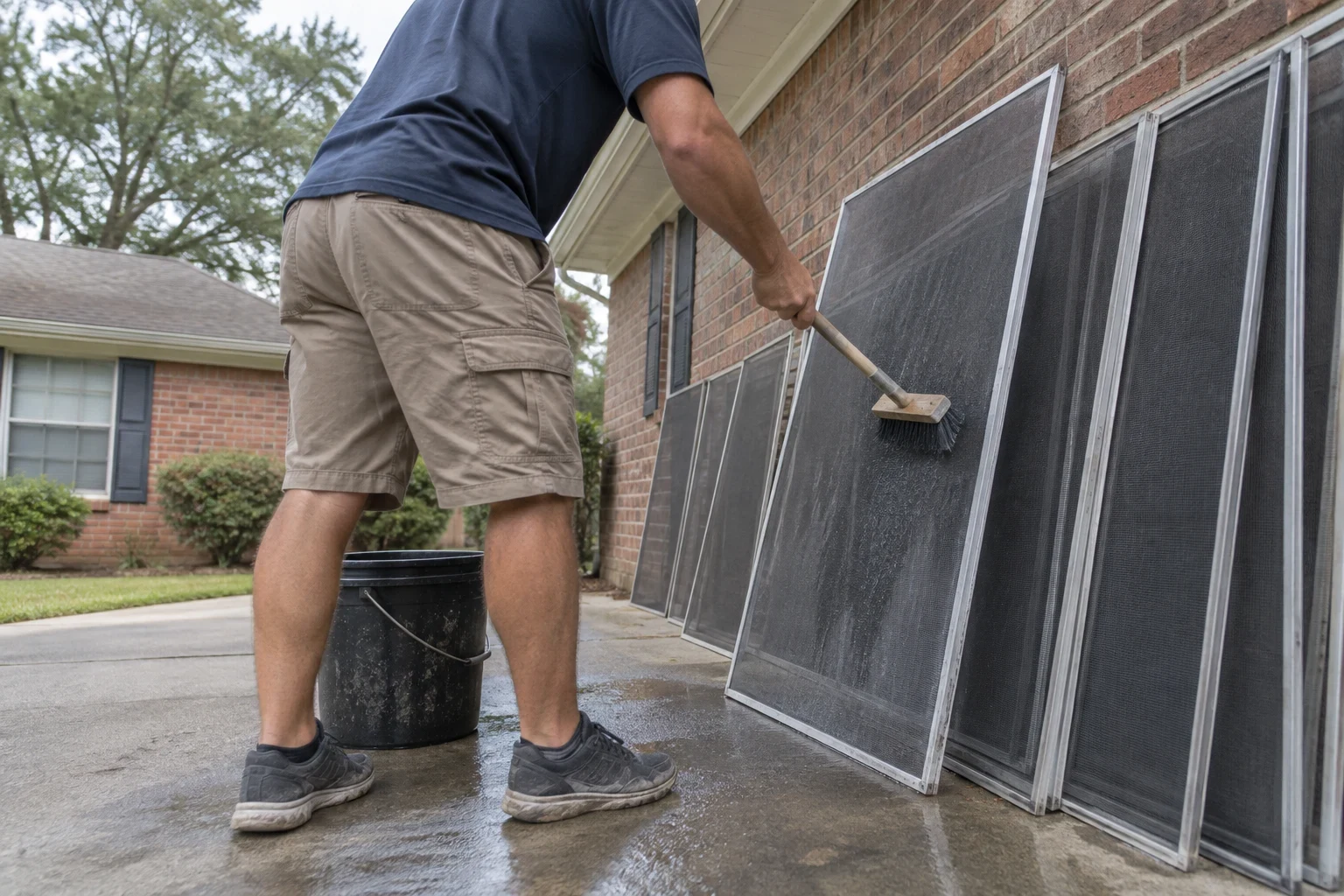
What screen cleaning and repair actually covers
Every window screen has three parts. There is a light metal frame, the mesh itself, and spline, a rubber cord pushed into a channel around the frame to hold the mesh tight. If one of those parts gives out, the screen sags, rattles or tears. And when dust clogs the mesh, the view looks gray even with freshly cleaned glass behind it.
Cleaning means we take each screen out, wash both sides with a soft brush and mild soap, then rinse it well so no residue dries into spots or streaks. Repair means swapping out whatever is worn. Usually that is only the spline or the mesh, and your existing frame stays.
Most people notice their screens in spring, when pine pollen around Walterboro coats the mesh in days. Having them done alongside residential window cleaning means glass and screens match, and that is what you see from the street.
What we do for your screens
Hand washing, both sides
We lay each screen flat, scrub it gently with a soft brush and rinse it clean. No pressure washer, because high pressure stretches mesh and can pop it out of the frame.
Rescreening torn mesh
If the mesh has a hole or a tear, we pull it out and stretch new mesh across the original frame. Standard fiberglass is the usual choice, and we can talk about aluminum or pet-resistant mesh if that suits you better.
New spline
Old spline dries out, shrinks and lets the mesh go slack. We roll in fresh spline sized to your frame's groove so the mesh sits tight and flat.
Frame straightening and corners
Lightly bent frames can often be straightened, and cracked plastic corner pieces can be swapped out. If a frame is too far gone to hold its shape, we will tell you plainly instead of patching it.
Pull tabs and fit check
We replace missing pull tabs so screens come out easily next time. Every screen goes back in its own window, and we check that it sits snug without gaps at the edges.
Signs your screens need attention
The view looks hazy
If the outdoors looks a little gray through the window, the mesh is likely packed with dust and pollen. Wash the glass alone and the haze stays.
Holes, tears or pet scratches
Even a small hole lets mosquitoes and gnats in, and tears tend to grow every time the window is opened.
Mesh pulling away from the edge
When the mesh bows out or lifts at a corner, the spline has usually shrunk or cracked. This is one of the simplest fixes.
Screens that rattle or fall out
A screen that won't stay seated often has a bent frame, a broken corner or missing spring clips.
Dark spots or green film
Our humid summers can leave mildew on mesh, especially on shaded sides of the house. A proper wash usually lifts it.
How a screen visit runs
- 1
Walk-through and count
We go around the outside with you, count the screens and point out any that are torn, loose or bent. You hear what each one needs before any work begins.
- 2
Label and remove
Each screen gets marked for its window as it comes out. That way every screen goes back exactly where it belongs.
- 3
Wash or repair
Screens that only need cleaning get scrubbed and rinsed. Damaged ones are rescreened or given new spline and corners. Standard sizes can often be handled during the same visit, while unusual sizes may need a second trip.
- 4
Dry, reinstall and tidy up
We let screens dry, set them back in place and check the fit. We clear away old mesh, spline and any rinse water mess before we leave.
What moves the price of screen work
Two things set the cost: the number of screens on your house and the condition each one is in. Washing a screen is a lighter job than putting new mesh and spline in it. On the phone we go through your screen count and any damage you have noticed, and you get a clear quote before we touch a single screen.
- Number and size of screens
- Each screen adds time. Big patio or porch screens take longer to wash and rescreen than the standard ones in your windows.
- Cleaning versus repair
- A wash is the simpler job. New mesh, fresh spline and frame or corner fixes add parts and labor to every screen that needs them.
- Mesh choice
- Most people pick standard fiberglass. Aluminum and pet-resistant mesh are pricier materials, and we lay out how they differ so the choice is yours.
- Access
- Upstairs screens that come out from the outside mean ladder work, and that takes longer than ground-floor windows.
- Pairing with other work
- Adding screens to window cleaning or window track and sill cleaning lets one trip handle everything, so you are not covering separate visits.
Screen cleaning and repair questions
Something not covered here? (843) 632-5706
Can my torn screen be repaired, or do I need a new one?
Most torn screens only need new mesh and spline on the frame you already have. A new frame is needed when the old one is badly bent, cracked or corroded. We look at each screen and tell you which it is, in plain terms.
What is the difference between fiberglass and aluminum mesh?
Fiberglass is soft, flexible and does not dent, which is why it is the common choice. Aluminum is stiffer and holds up a little better to wear, but it can crease if bumped. Pet-resistant mesh is thicker and stands up to claws far better than either.
Why not just hose my screens off myself?
Nothing wrong with that, and a light spray between professional washes does some good. The trouble is that water by itself seldom shifts the fine dust and pollen lodged in the weave. A soft brush, mild soap and a thorough rinse are what leave the mesh truly clear.
Do you clean screens when you clean windows?
Screen washing pairs naturally with residential window cleaning, since dirty screens make clean glass look dull. Ask about both when you call and we will plan one visit around them.
How often should screens be cleaned?
Once a year suits most homes, ideally after the spring pollen settles. Homes near dirt roads, fields or lots of trees may want a second wash in the fall.
Ready for clear, tight screens again
Give us a rough screen count and a sense of any tears, sagging or bent frames. We will walk you through the options and quote the job straight over the phone.